
Edit, Download, and Sign the Toxicology Analysis Request Form Submission Guidelines
Form
eSign
Add Annotation
Share Form
How do I fill this out?
To fill out the Toxicology Analysis Request Form, start by entering the subject's personal information. Ensure that all sample information is accurately recorded. After completing the form, remember to print and submit it with the samples.
How to fill out the Toxicology Analysis Request Form Submission Guidelines?
1
Enter the subject's last name, first name, and middle name.
2
Fill in the subject's date of birth and ID information.
3
Specify the sample type and the number of samples being submitted.
4
Complete the submission checklist to avoid delays.
5
Print the completed form for submission with the samples.
Who needs the Toxicology Analysis Request Form Submission Guidelines?
1
Law enforcement agencies need this form to request toxicology analysis for investigations.
2
Medical professionals may utilize this to submit samples for patient care.
3
Forensic labs require it to process toxicology samples properly.
4
Accident investigation units need this for evidence collection.
5
Legal professionals use this for gathering evidence in court cases.
How PrintFriendly Works
At PrintFriendly.com, you can edit, sign, share, and download the Toxicology Analysis Request Form Submission Guidelines along with hundreds of thousands of other documents. Our platform helps you seamlessly edit PDFs and other documents online. You can edit our large library of pre-existing files and upload your own documents. Managing PDFs has never been easier.

Edit your Toxicology Analysis Request Form Submission Guidelines online.
Editing this PDF on PrintFriendly is straightforward. You can modify text fields and update sample information as needed. Just load the PDF, make your changes, and download the updated version.

Add your legally-binding signature.
You can easily sign the PDF on PrintFriendly. After editing, simply use the electronic signature feature to add your signature. Save the document with your signature for official submission.
Share your form instantly.
Sharing the PDF on PrintFriendly is simple and convenient. You can generate a shareable link to your document to send to colleagues. This allows others to access and review the form efficiently.
How do I edit the Toxicology Analysis Request Form Submission Guidelines online?
Editing this PDF on PrintFriendly is straightforward. You can modify text fields and update sample information as needed. Just load the PDF, make your changes, and download the updated version.
1
Upload the Toxicology Analysis Request Form to PrintFriendly.
2
Click on the text fields to edit information as required.
3
Review all changes to ensure accuracy.
4
Once satisfied, click the download button to save your edits.
5
Share the edited PDF with necessary parties as needed.

What are the instructions for submitting this form?
To submit the Toxicology Analysis Request Form, ensure all fields are completed accurately. You can submit the form via email at forensictox@utah.gov or fax it to (801) 965-2450. Additionally, forms can be mailed to the Bureau of Forensic Toxicology at PO Box 144300, Salt Lake City, UT 84114-4300.
What are the important dates for this form in 2024 and 2025?
Important dates for submission of toxicology samples may vary annually. Ensuring timely submission prior to any cut-off dates is crucial for analysis. Check specific agency deadlines for updates in 2024 and 2025.

What is the purpose of this form?
The purpose of the Toxicology Analysis Request Form is to facilitate the formal requests for toxicology analysis of forensic samples. It serves as an official document that contains essential information about the subject and samples. Proper use of this form is critical to ensure that samples are analyzed accurately and in a timely manner.

Tell me about this form and its components and fields line-by-line.

- 1. Last Name: Subject's last name.
- 2. First Name: Subject's first name.
- 3. Middle Name: Subject's middle name.
- 4. Gender: Subject's gender.
- 5. Date of Birth: Subject's date of birth for identification.
- 6. ID#: Identification number of the subject.
- 7. Sample Type: Type of samples being submitted.
- 8. Number of Samples: Total number of samples submitted.
- 9. Collection Date: Date samples were collected.
- 10. Collection Time: Time samples were collected.
- 11. Agency Case#: Reference number for agency's case.
What happens if I fail to submit this form?
Failure to submit the form may result in delays or rejection of toxicology analysis. It's essential to complete all fields accurately to avoid such issues.
- Delays in Analysis: Incomplete or inaccurate forms may lead to processing delays.
- Rejection of Samples: Samples may be returned if the submission criteria are not met.
- Legal Consequences: Failure to provide required information can impact investigations.
How do I know when to use this form?

- 1. DUI Investigations: This form is used to test for alcohol and drugs in DUI cases.
- 2. Accident Reports: Required for toxicology analysis in vehicular accidents.
- 3. Forensic Analysis: Used to gather evidence in forensic investigations.
Frequently Asked Questions
How do I download the Toxicology Analysis Request Form?
You can download the form by clicking the download button after editing it on PrintFriendly.
Can I edit the Toxicology Analysis Request Form?
Yes, PrintFriendly allows you to edit the PDF form before downloading.
What information is required on this form?
Essential details include the subject's name, date of birth, sample type, and officer's information.
How can I submit the form?
Submit the completed form along with the samples via email, fax, or physical delivery.
Is there a checklist I need to follow for submission?
Yes, ensure you verify the submission checklist to avoid any delays.
Who can request toxicology analysis?
Law enforcement agencies, medical professionals, and forensic experts can request this analysis.
What happens if I don’t fill in all required fields?
Incomplete forms may lead to delays in processing or rejection of samples.
Where do I send the submitted samples?
Follow the addresses provided on the form for submission.
Can I print the form after editing it?
Yes, you can print the edited form directly from PrintFriendly.
What is the purpose of this form?
The form is used to formally request toxicology testing on samples.
Related Documents - Toxicology Request Form
Lost/Stolen Firearms Investigations Record
This file helps firearm owners keep a personal record of their firearms in the event they are lost or stolen. It includes fields for detailed descriptions of each firearm to assist law enforcement in investigations. Maintained separately from firearms, this record supports insurance claims and reacquisition efforts.
Georgia Department of Corrections Visitation Application
This file is an application form for visitation privileges at Georgia correctional facilities. It gathers personal information and criminal history of the visitor. Complete this form to establish your relationship with an inmate for visitation approval.
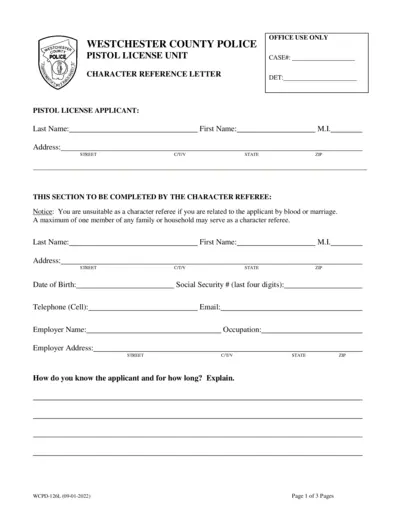
Westchester County Police Pistol License Application
This file contains the necessary application form for obtaining a pistol license in Westchester County, NY. It guides the applicant through providing personal information and character references. Ensure all sections are thoroughly completed to improve processing time.
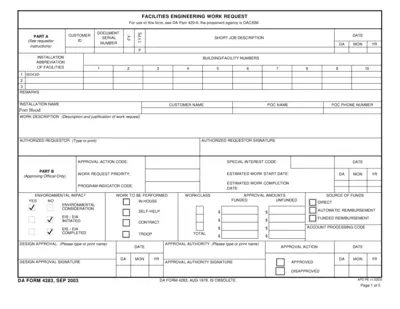
Facilities Engineering Work Request Form Instructions
This file provides a structured form for submitting facilities engineering work requests. It outlines necessary fields and approval processes. Ideal for both individual and organizational submissions to ensure work is promptly addressed.
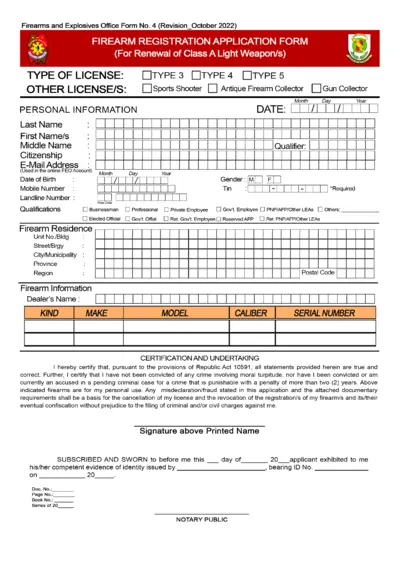
Firearm Registration Application Form for Renewal
This application form is required for renewing a Class A Light Weapon's registration. It collects personal and firearm information to comply with legal requirements. Ensure that all details are accurately provided to avoid issues with your application.
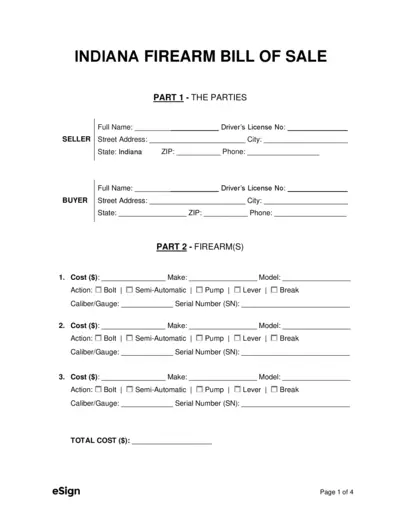
Indiana Firearm Bill of Sale Template and Guide
This Indiana firearm bill of sale template details information for buyers and sellers. It includes instructions and disclosures to ensure compliance with state laws. Use this document for legally transferring firearm ownership.
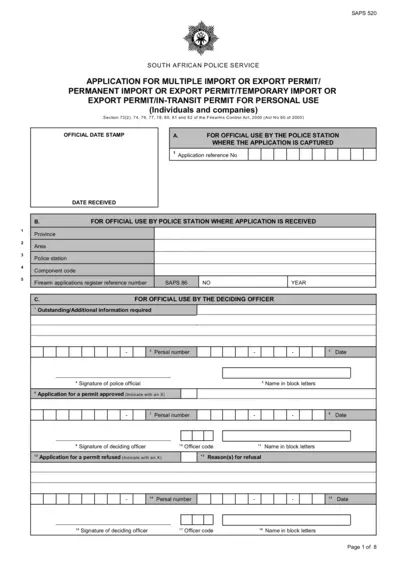
Application for South African Import Export Permit
The SAPS 520 form is required for individuals and companies applying for import or export permits for firearms in South Africa. This document provides guidelines for completing the application, necessary fields, and submission procedures. Ensure that all required information is accurately filled out to avoid delays in processing.
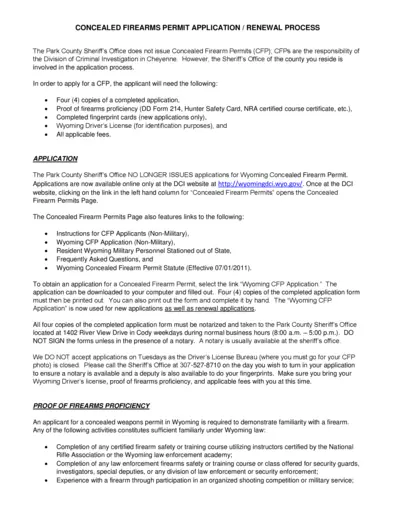
Concealed Firearms Permit Application Process
This file outlines the process for applying for a concealed firearms permit in Wyoming. It includes necessary documents, fees, and where to submit your application. Follow the instructions to ensure your application is completed correctly.
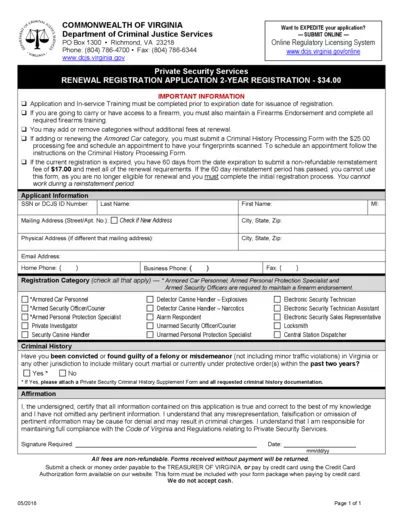
Virginia Private Security Services Registration Form
This document is the Virginia Private Security Services Registration Form. It is essential for individuals seeking to apply for or renew their registration in private security services. Complete all required fields accurately to ensure a smooth processing experience.
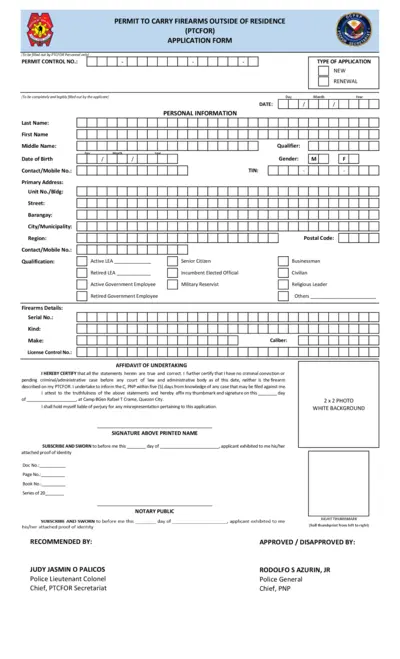
Permit to Carry Firearms Outside Residence Application
This application form is required for individuals seeking a permit to carry firearms outside their residence. It includes personal details, firearm information, and necessary certifications. Ensure all information is accurately provided to avoid any processing delays.
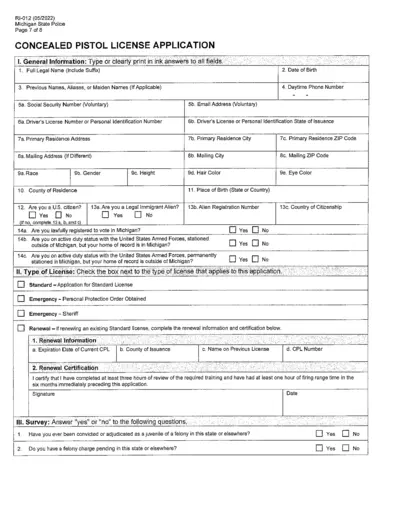
Concealed Pistol License Application Michigan
This file outlines the application process for a Concealed Pistol License (CPL) in Michigan. It includes general information requirements, license types, and survey questions related to eligibility. The application also covers agreements and certifications required for applicants.
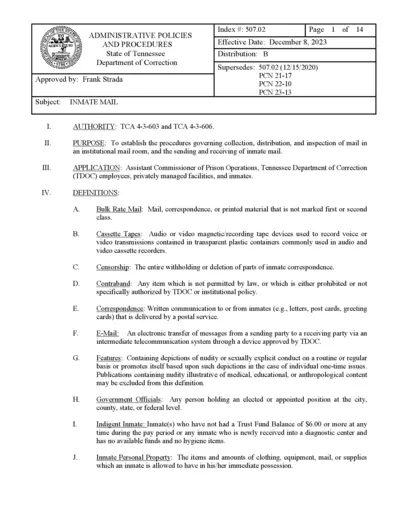
Tennessee Inmate Mail Procedures and Policies
This document outlines the policies and procedures for inmate mail in the Tennessee Department of Correction. It provides guidelines for sending, receiving, and inspecting inmate mail. Understanding these regulations is essential for compliance and effective communication with inmates.